




 Indietro












Netskope Threat Labs publishes a monthly summary blog post of the top threats we are tracking on the Netskope platform. The purpose of this post is to provide strategic, actionable intelligence on active threats against enterprise users worldwide.
Summary
- Attackers continue to attempt to fly under the radar by using cloud apps to deliver malware, with 57% of all malware downloads in July originating from 167 cloud apps.
- Although Microsoft OneDrive remains the top app in terms of the number of malware downloads, the percentage of malware downloads from OneDrive continued to fall for the fourth consecutive month.
- RaspberryRobin, an evasive Trojan used to deliver a variety of malware payloads, and Phobos, a ransomware family that targets small- and medium-sized businesses, made the top ten list for the first time in July.
Cloud Malware Delivery
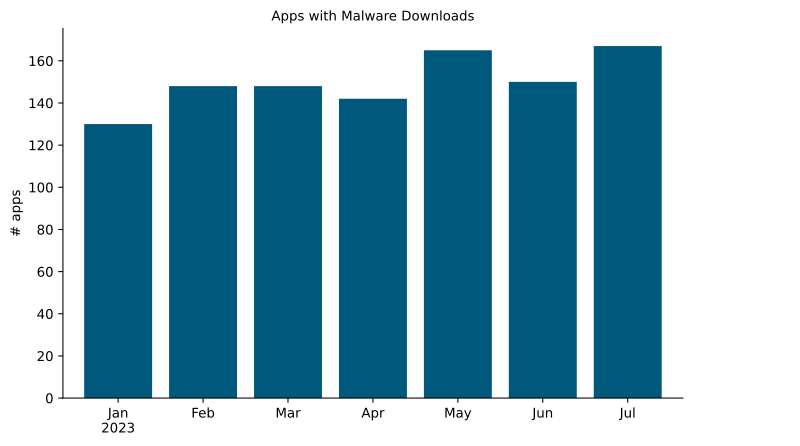
Attackers attempt to fly under the radar by delivering malicious content via popular cloud apps. Abusing cloud apps for malware delivery enables attackers to evade security controls that rely primarily on domain block lists and URL filtering, or that do not inspect cloud traffic. In July 2023, 57% of all HTTP/HTTPS malware downloads originated from popular cloud apps. For each of the past six months, at least half of all malware downloads have originated from cloud apps.
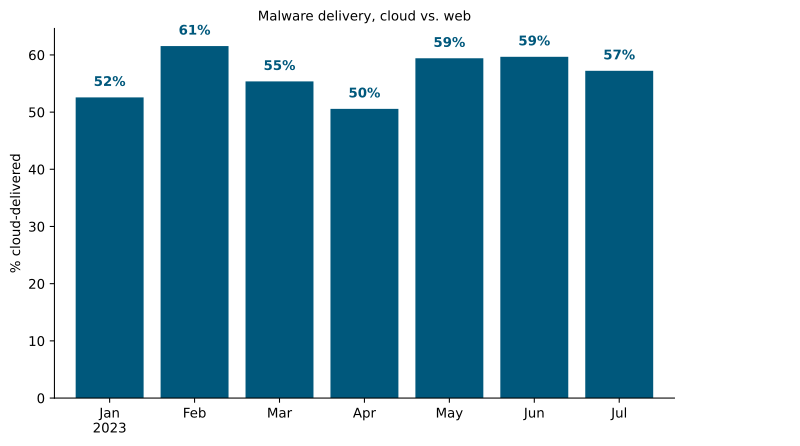
At the same time, the total number of cloud apps from which malware downloads originated increased to 167, indicating that attackers continue to reach their victims on an increasingly diverse set of cloud apps.
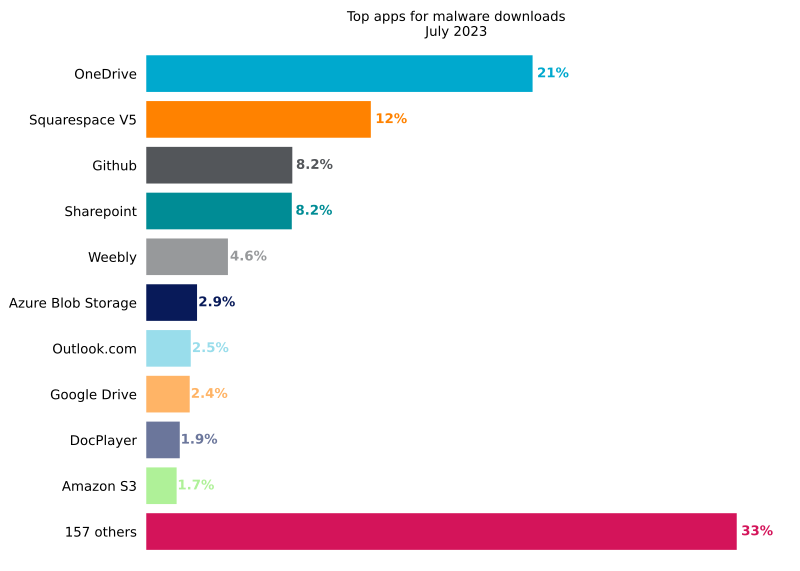
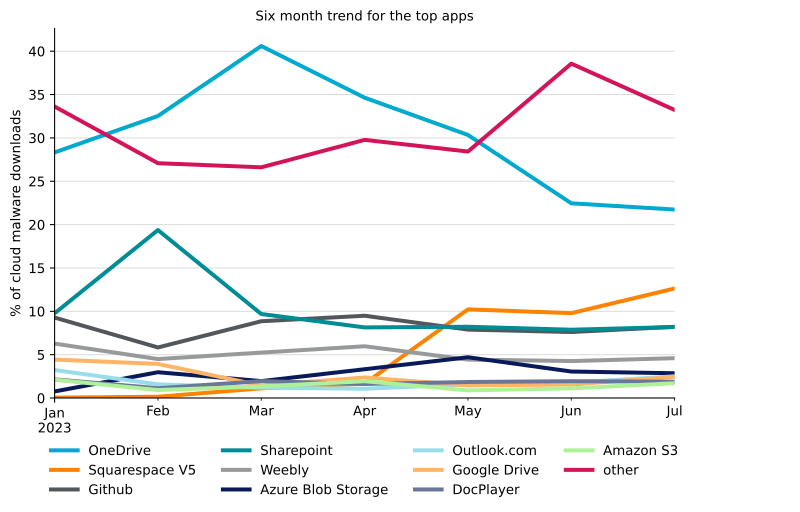
Attackers achieve the most success reaching enterprise users when they abuse cloud apps that are already popular in the enterprise. Microsoft OneDrive, the most popular enterprise cloud app, has held the top spot for the most cloud malware downloads for more than six months. Although the percentage of cloud downloads from OneDrive has fallen for the fourth consecutive month, it still remains in first place. Squarespace, a free web hosting service, is in the second place spot for a third consecutive month as a variety of different malware families continue to be hosted on Squarespace sites. Other top apps for malware downloads include free web hosting services (Weebly), free software hosting sites (GitHub), collaboration apps (SharePoint), cloud storage apps (Azure Blob Storage, Google Drive, Amazon S3), and webmail apps (Outlook.com). DocPlayer, a free document sharing app, made the top ten for the fourth consecutive month as malicious PDF files have increased in popularity. In total, the top ten accounted for two-thirds of all cloud malware downloads, with the remaining one-third spread over 157 other cloud apps. The top ten list is a reflection of attacker tactics, user behavior, and company policy.
Top Malware File Types
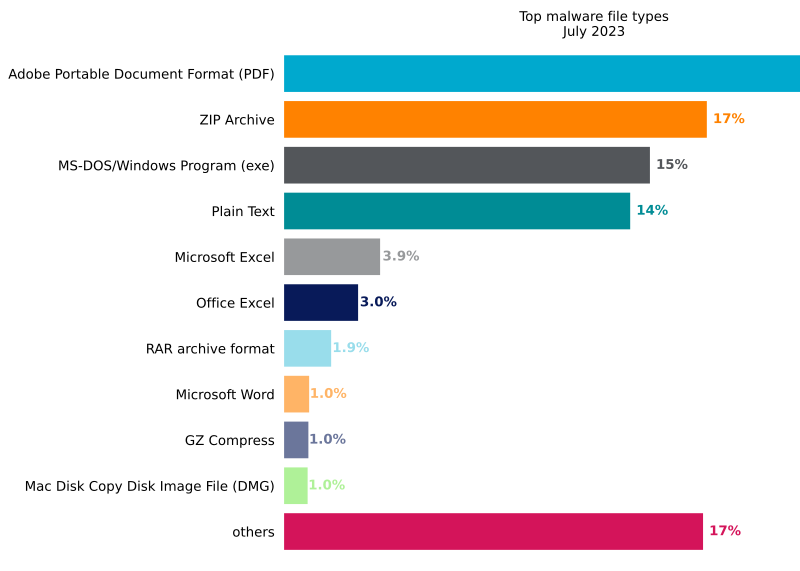
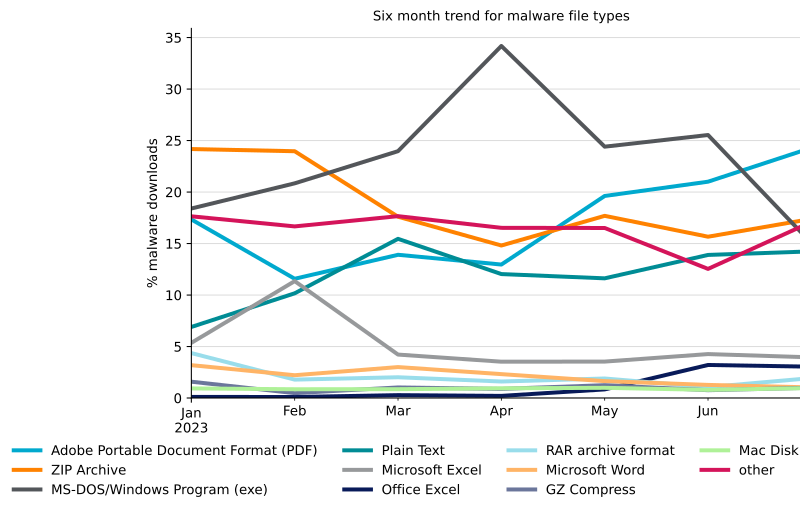
By file type, Microsoft Windows Portable Executable files (EXE/DLL) were knocked out of the top spot for the first time in five months, falling to the third spot, behind PDF files and ZIP archive files. Malicious PDF files have been gaining popularity over the past six months as attackers use them in a variety of ways, including as phishing bait and as tools to trick users into downloading Trojans. ZIP archives are commonly used to hide Trojans alongside benign content, in an attempt to avoid detection. The remaining file types are mostly unchanged from last month.
Top Malware Families
Attackers are constantly creating new malware families and new variants of existing families, either as an attempt to bypass security solutions or to update their malware’s capabilities. In July 2023, 71% of all malware downloads detected by Netskope were either new families or new variants that had not been observed in the preceding six months. The other 29% were samples that had been previously observed during the preceding six months and are still circulating in the wild.
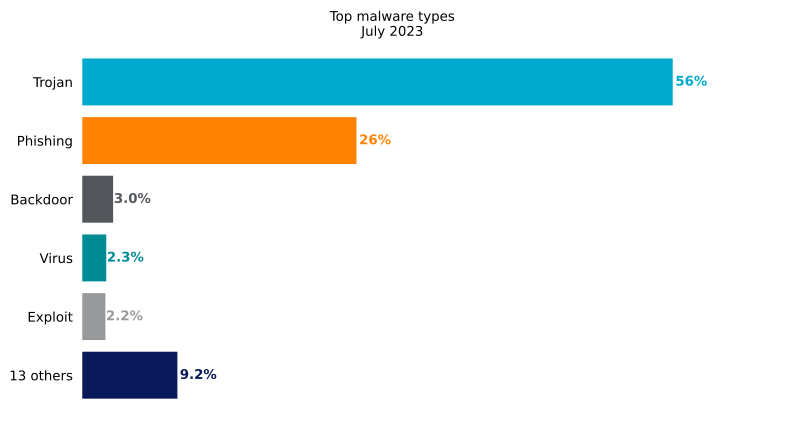
By volume, Netskope blocks more Trojans than any other malware type. Trojans are commonly used by attackers to gain an initial foothold and to deliver other types of malware, such as infostealers, Remote Access Trojans (RATs), backdoors, and ransomware. Other top malware types include phishing lures (typically PDF files designed to lure victims into phishing scams), backdoors (which provide clandestine remote access), viruses (which can propagate themselves), and file-based exploits. The relative distribution of malware types changes very little month-over-month.
The following list contains the top malware and ransomware families blocked by Netskope in July 2023:
- Adware.Bundlore (a.k.a. SurfBuyer) is an OSX adware installer that has circulated in many forms including Flash player installers, hidden scripts, and browser plugins. Details
- Backdoor.Fuerboos (a.k.a. Goodor) is a backdoor written in Go and associated with Dragonfly. Details
- Backdoor.Zusy (a.k.a. TinyBanker) is a banking Trojan based on the source code of Zeus, aiming to steal personal information via code injection into websites. Details
- Infostealer.ClipBanker is an infostealer that steals banking information among other data and is typically spread via emails and social media Details
- Phishing.PhishingX is a malicious PDF file used as part of a phishing campaign to redirect victims to a phishing page.
- Ransomware.IndustrialSpy is a new ransomware variant that emerged in 2022 from malware that previously stole data for sale on a data extortion marketplace. Details
- Ransomware.Phobos has been around since 2018 and targets small and medium sized businesses using phishing emails with malicious attachments and by exploiting RDP servers exposed to the internet. Details
- Trojan.RaspberryRobin is widely used to spread other malware families, including IcedID and Clop, and has been spread in 7z, LNK, MSI and other formats. Details
- Trojan.Razy is a Trojan typically distributed via malicious ads disguised as legitimate software, often used to steal cryptocurrency data. Details
- Trojan.Valyria (a.k.a. POWERSTATS) is a family of malicious Microsoft Office Documents that contain embedded malicious VBScripts usually to deliver other malicious payloads. Details
Recommendations
Attackers have always sought to evade detection and avoid suspicion in delivering malware. Two strategies that attackers have been using increasingly in the past six months are to deliver malware by abusing cloud apps and to package malware in archive files. Netskope Threat Labs recommends that you review your security posture to ensure that you are adequately protected against both of these trends:
- Inspect all HTTP and HTTPS downloads, including all web and cloud traffic, to prevent malware from infiltrating your network. Netskope customers can configure their Netskope NG-SWG with a Threat Protection policy that applies to downloads from all categories and applies to all file types.
- Ensure that your security controls recursively inspect the content of popular archive files such as ZIP files for malicious content. Netskope Advanced Threat Protection recursively inspects the content of archives, including ISO, TAR, RAR, 7Z, and ZIP.
- Ensure that high-risk file types like executables and archives are thoroughly inspected using a combination of static and dynamic analysis before being downloaded. Netskope Advanced Threat Protection customers can use a Patient Zero Prevention Policy to hold downloads until they have been fully inspected.
- Configure policies to block downloads from apps that are not used in your organization to reduce your risk surface to only those apps and instances that are necessary for the business.
- Block downloads of all risky file types from newly registered domains and newly observed domains.
In addition to the recommendations above, Remote Browser Isolation (RBI) technology can provide additional protection when there is a need to visit websites that fall in categories that present higher risk, like Newly Observed and Newly Registered Domains.
About This Report
Netskope provides threat and data protection to millions of users worldwide. Information presented in this report is based on anonymized usage data collected by the Netskope Security Cloud platform relating to a subset of Netskope customers with prior authorization. This report contains information about detections raised by Netskope’s Next Generation Secure Web Gateway (SWG), not considering the significance of the impact of each individual threat. Stats in this report are based on the period starting January 1, 2022 through July 31, 2023. Stats are reflection of attacker tactics, user behavior, and organization policy.


 Leggi il blog